This was one of those games where the scoreboard lies about the quarterback. QBs are judged more harshly than any other position in football. Nowhere is that truer than on the College Football Playoff stage. When Oregon was demolished 56-22 by Indiana in the Chick-fil-A Peach Bowl, the instinctive reaction was simple. Dante Moore collapsed, and his draft stock must have followed.
That reaction is lazy and wrong.
Of course, the loss was brutal, and Moore turned the ball over. Yes, the Hoosiers exposed Oregon in every phase of the game. That said, NFL evaluators don’t scout quarterbacks the way fans or postgame box scores do. They scout traits, processing, poise, and repeatable habits under duress. In that regard, Moore didn’t just survive the worst night of his season. He quietly reaffirmed why he remains one of the crown jewels of the 2026 NFL Draft.
Peach Bowl disaster

The No. 5 Oregon Ducks saw their CFP run end in emphatic fashion at the hands of the undefeated Indiana Hoosiers. The game unraveled immediately. On the very first play from scrimmage, Indiana jumped a route and returned an interception 25 yards for a touchdown. That instantly tilted the game’s momentum and tone.
Things only got worse in the first half. Indiana’s defense relentlessly attacked Moore. They forced two additional fumbles before halftime and built a commanding 35–7 lead. Oregon never recovered. The Ducks struggled to establish any offensive rhythm. They managed little consistency as Indiana dictated terms with pressure, discipline, and surgical execution.
Moore finished the game with one interception and two lost fumbles. He didn’t deflect responsibility afterward.
“The quarterback has to protect the football,” Moore said postgame.
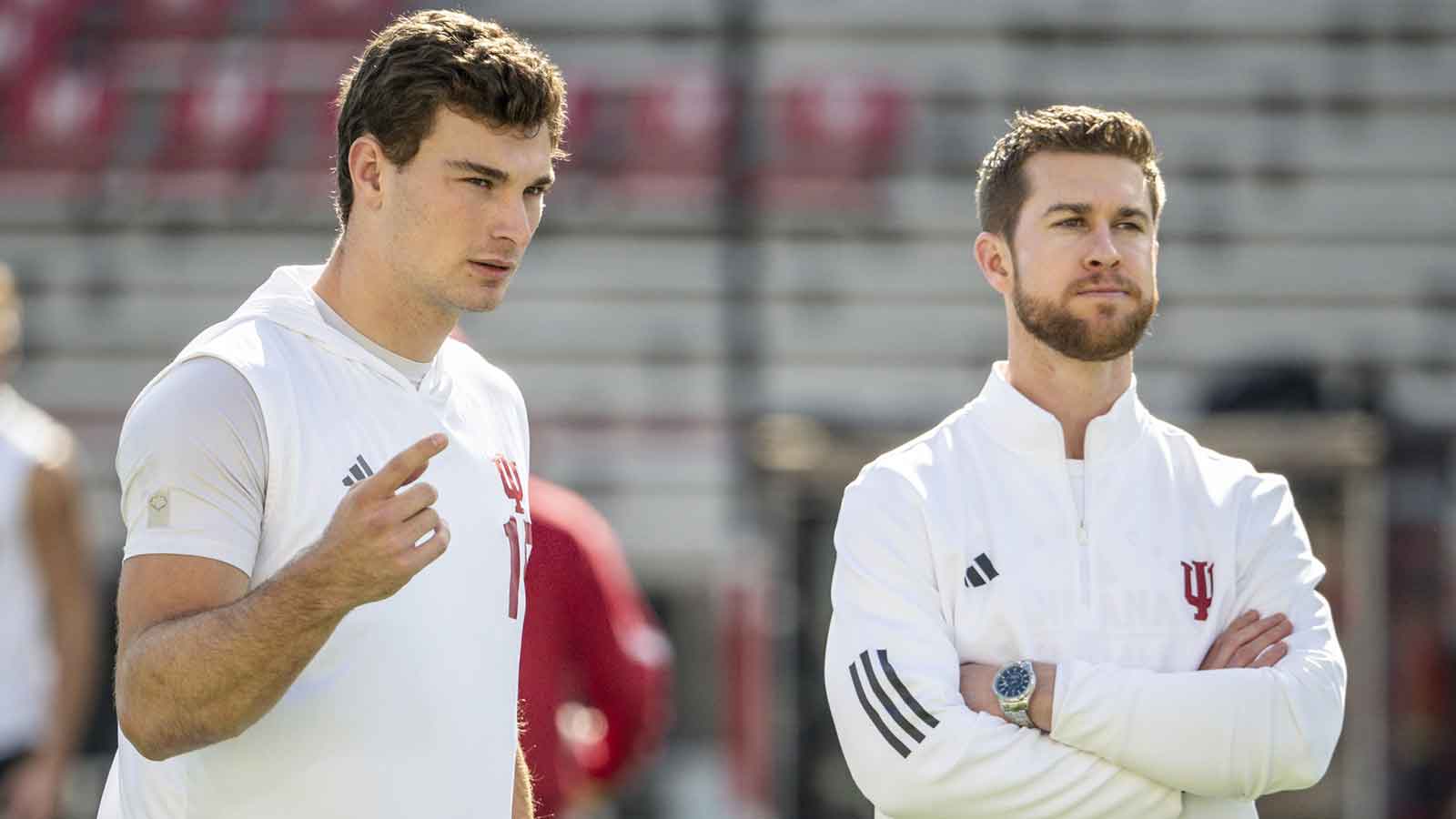
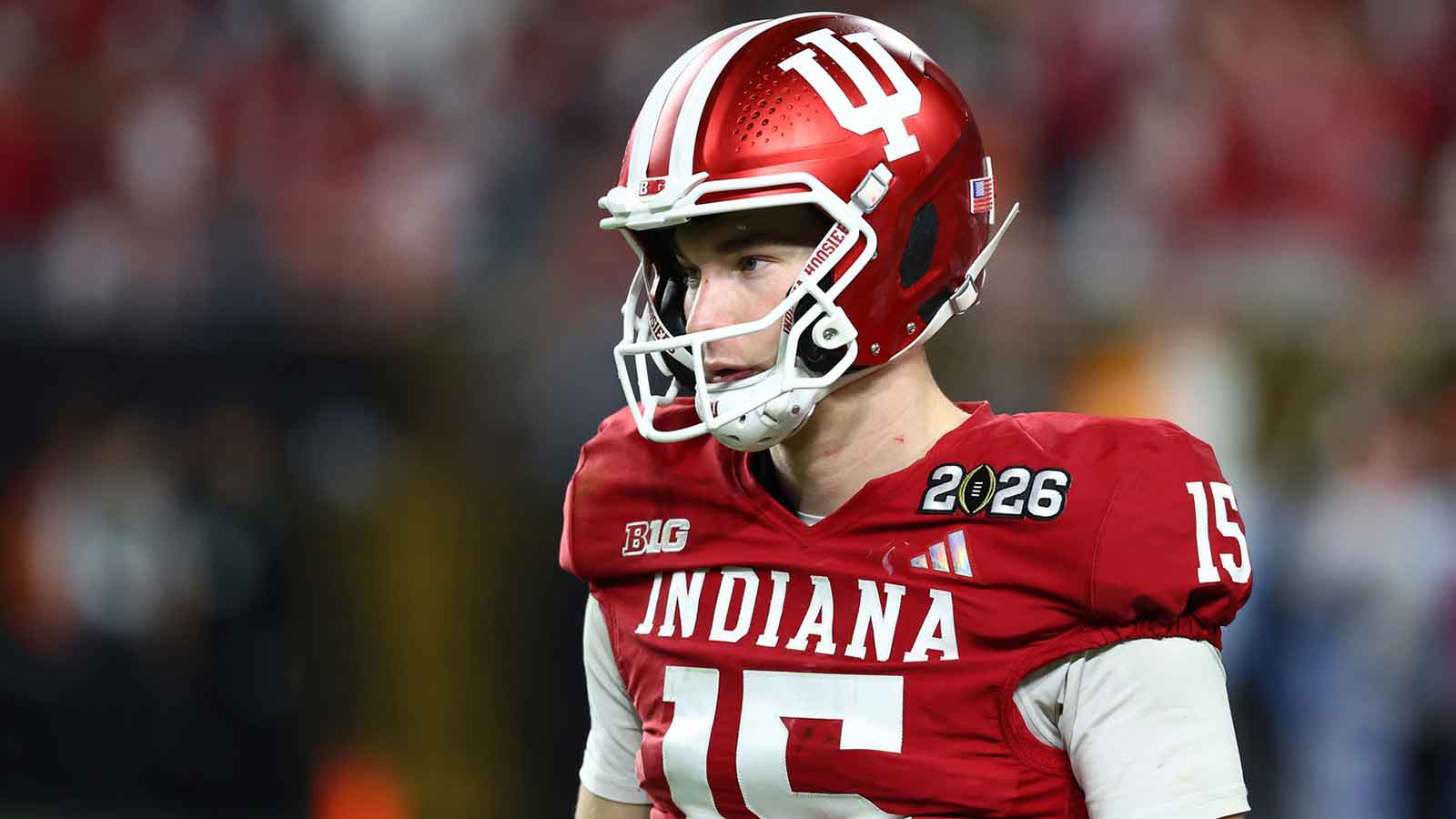
Yes, Oregon running back Dierre Hill Jr flashed with a 71-yard breakout run that set up one of the Ducks’ few scores. However, Indiana quarterback Fernando Mendoza delivered a clinic. The Heisman Trophy winner completed 17 of 20 passes for 177 yards and five touchdowns without a turnover. That underscored the gap between the two teams on that night.
Oregon’s season ended at 13–2. Both losses came against Indiana, and the Peach Bowl will be remembered as a lopsided affair. Still, that doesn’t mean Moore’s evaluation begins and ends there.
Context over box score
NFL scouts are allergic to simplistic narratives. Moore’s Peach Bowl tape demands context. A lot of it.
Moore faced an Indiana defense that led the nation in havoc rate, sacks, and forced interceptions. It was built specifically to overwhelm quarterbacks with layered pressure and disguised coverages. Indiana finished the game with three sacks and repeatedly collapsed the pocket before routes could develop.
Despite that, Moore dropped back 39 times, completed nearly 62 percent of his passes. He threw for 285 yards and two touchdowns. That production would be praised in most contexts but gets lost in the blowout.
Pro traits still showed
Strip away the turnovers and scoreboard, and Moore’s tape still flashes with traits scouts covet. His quick release time neutralized several blitz looks. He navigated the pocket fluidly, evading several would-be sacks and keeping his eyes downfield instead of bailing prematurely.
One of the most telling plays came on their first-quarter touchdown, which was a 19-yard throw to Jamari Johnson. That’s an NFL throw. Timing, confidence, and velocity converging against pressure.
Even on plays that ended poorly, Moore didn’t panic. There were no reckless heaves, no late throws into double coverage born of desperation. His mistakes came from pressure and physical hits, not mental breakdowns. That distinction matters enormously at the next level.
Season-long metrics back it up. Moore finished the season with over 3,500 passing yards, 30 touchdowns, and 10 interceptions, good for a 163.7 passer rating. The Peach Bowl didn’t erase four months of elite tape.
Youth showed
None of this is to say Moore played well. He didn’t. His ball security must improve, and his feel for pressure will continue to evolve. That youth showed across all four quarters.
If Moore entered the game genuinely undecided about his NFL future, it’s reasonable to think the Peach Bowl loss could push him toward another year in school. More reps, polish, and command.
Here’s the reality, though: if Moore declares for the 2026 NFL Draft, he’s still very likely a top-three pick. Quarterbacks with his arm talent, processing speed, and composure under fire simply don’t last long on draft night. NFL teams are betting on ceilings. Moore’s remains sky-high.
One night only
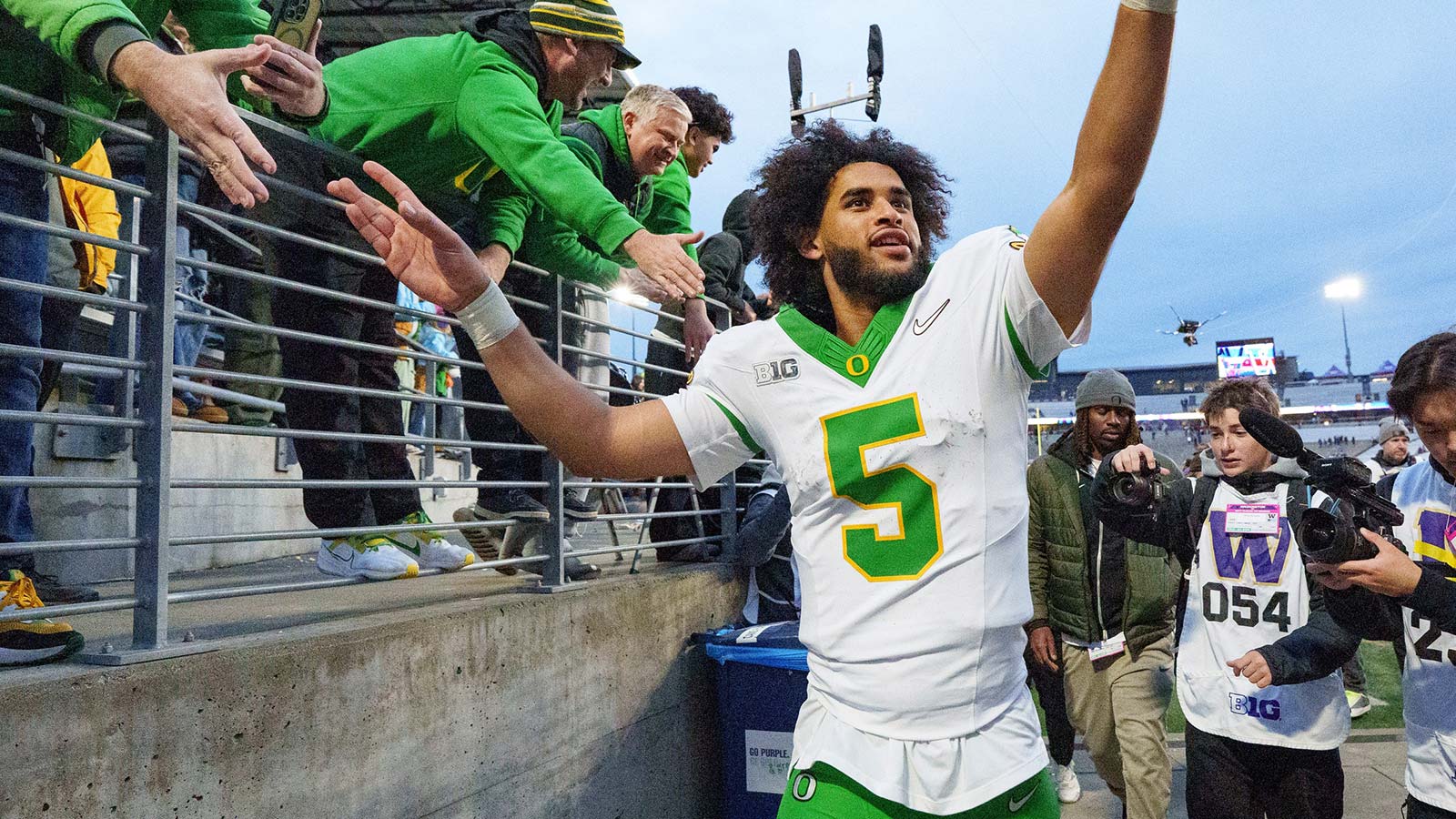
The spotlight always burns hottest on the quarterback, especially in playoff blowouts. Moore will wear this loss longer than most. That's because this is the burden of the position.
However, scouts don’t erase evaluations because of one night. That's especially true where the environment was stacked against the player. They look for how quarterbacks respond, how they process adversity, and whether their traits translate when structure collapses.
Against Indiana, structure didn’t just collapse. It vaporized. Still, Moore kept competing, throwing, and commanding the huddle.
That’s why his draft stock didn’t crater. It barely moved. The Peach Bowl was ugly. Dante Moore’s future remains anything but.