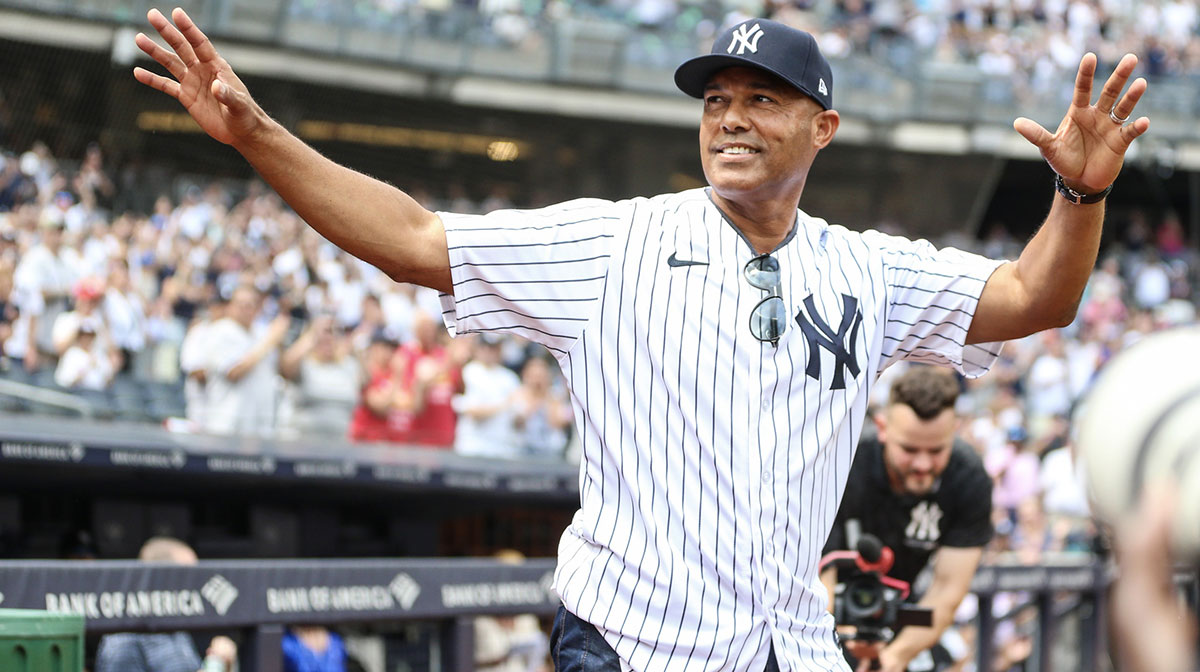
Mariano Rivera doesn’t just belong in the conversation of baseball greatness — he defines it. Widely regarded as the greatest closer in MLB history, Rivera is the all-time saves leader, a five-time World Series champion, and the ultimate postseason weapon, finishing his career with an absolutely insane 0.70 ERA in October across 96 playoff innings. As a cornerstone of the Yankees’ late-1990s and early-2000s dynasty, Rivera was a key member of the franchise’s legendary “Core Four,” alongside “The Captain” Derek Jeter, Andy Pettitte, and Jorge Posada.
His dominance on the mound helped fuel one of the most sustained runs of excellence in modern sports, turning ninth innings into inevitabilities and championships into expectations (especially in New York). A first-ballot Hall of Famer and the first unanimous selection in Baseball history, Rivera’s legacy isn’t just about trophies or records — it’s about redefining excellence under pressure.
Rivera’s greatness ultimately traced back to a single pitch that became baseball mythology: the cutter. Thrown with late, violent movement at the hands of righties and darting in on lefties, Rivera’s cut fastball is widely regarded as the most unhittable pitch in baseball history.
Hitters knew it was coming, studied it endlessly, and still broke bats by the hundreds—often sawing them in half in weak, helpless contact. What made the pitch so devastating wasn’t just its movement, but Rivera’s pinpoint command and identical arm speed, making it impossible to distinguish from a traditional fastball until it was too late.
Even the game’s best hitters admitted defeat before stepping into the box against Mariano Rivera, whose cutter didn’t just end at-bats—it ended games, seasons, and championship dreams.
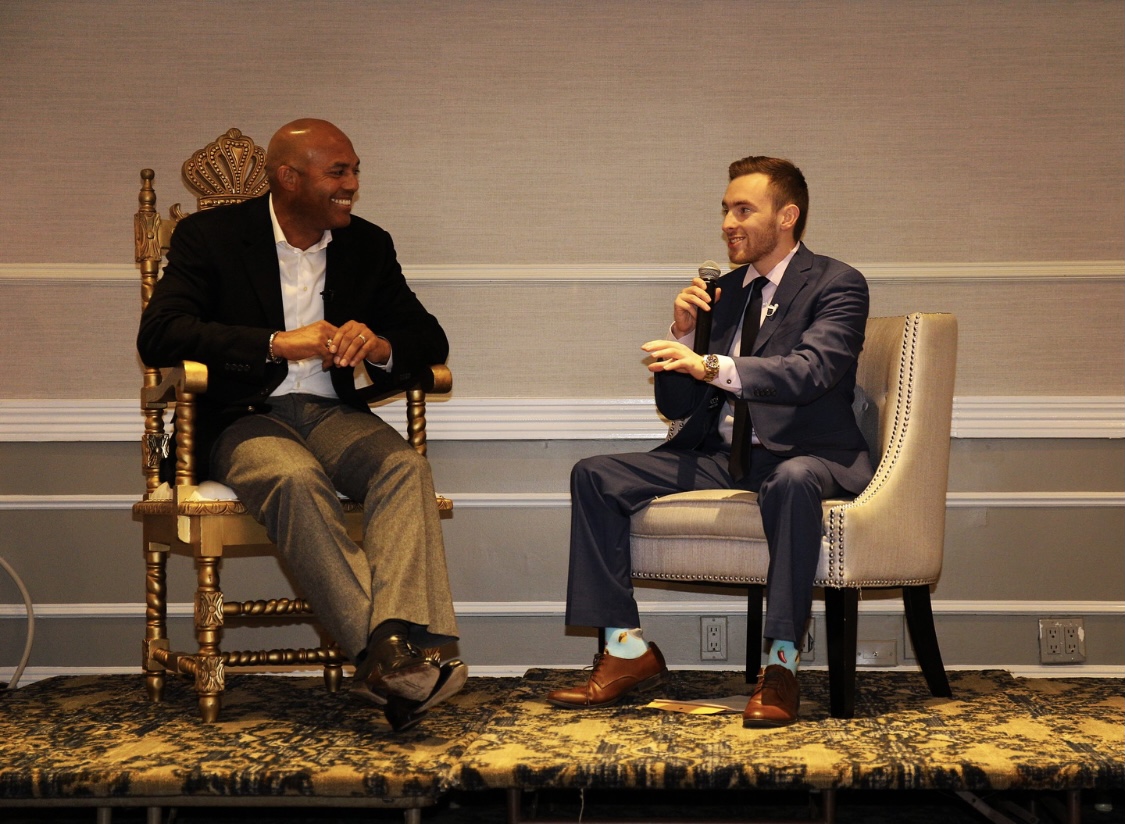
As part of an exclusive interview with ClutchPoints' Rob Lepelstat, Rivera walks through the most unhittable pitch in baseball history, that cutter:
RL: God gave you a pitch that no one could ever hit. Why was that pitch different from any other pitcher’s—one that no one could ever figure out, Mo?
MR: “The simple answer is, we’ve got to go to heaven to hear that one,” Rivera said. “I wasn’t looking for it. Matter of fact, I was trying to stop the ball from moving—thank God that didn’t happen. I had no control over the pitch.
“Anything the Lord gives you, He gives you to be successful—we just have to learn how to use it. Sometimes we don’t want to make the effort to learn how to use the tools the Lord gives us, and we end up ruining them. I was trying to ruin it, and the Lord wouldn’t allow me to do that.
“The rest is history. I pitched 17 years with that same pitch. It was fun.
Stack Rivera up against the other all-time great relievers—Trevor Hoffman, Dennis Eckersley, Kenley Jansen, Billy Wagner—and the separation becomes unmistakable. Each dominated in their own era, piled up saves, and anchored bullpens, but none matched Rivera’s combination of longevity, consistency, and postseason supremacy.
While others had peak years, Rivera owned decades. While most relievers are judged on regular-season numbers, Rivera elevated his performance when the stakes were highest, becoming virtually untouchable in October. He wasn’t just better than his peers—he rendered the debate obsolete. In an era filled with elite closers, Rivera stood alone at the summit, the undisputed standard by which every relief pitcher before and after him is measured.
The cleanest way to understand Mariano Rivera’s dominance is to compare it to Tiger Woods at the height of his powers. Tiger didn’t just beat his peers—he intimidated them. When he held a Sunday lead, tournaments felt finished before the final holes were played. His presence alone altered how competitors played, pressed, and unraveled, knowing perfection was required just to have a chance.
Woods was virtually unbeatable with a lead, posting a 55–4 record when holding at least a share of the 54-hole lead and an astonishing 44–2 mark when leading outright. In fact, he lost only once in his career when leading by more than one shot entering the final round—a statistical snapshot of pure inevitability.
Rivera occupied that same rarefied air at his position. Other closers were great; Rivera was inevitable. Managers built entire postseason strategies around trying not to face him, the same way opposing golfers wanted nothing to do with Tiger Woods in a red shirt on Sunday at a major. Once Rivera took the mound, the ending felt predetermined—not because of hype, but because history had already shown how those moments usually ended.
That’s the difference between being the best of your era and being untouchable across eras. Rivera wasn’t just the greatest closer ever; like Woods, he redefined what greatness at that position could even look like. Rivera's 652 saves sit well ahead of Trevor Hoffman (601) and Lee Smith (478), underscoring just how rare his longevity and reliability truly were. And the voters unanimously agreed.
What truly elevated Rivera from all-time great to untouchable was his clutch gene, the rare ability to get better when the pressure was at its absolute peak. October wasn’t a different stage for Rivera—it was his comfort zone.
Rivera allowed just two earned runs allowed in 141 World Series innings — a stat just like Woods, so absurd it barely sounds real.
Over nearly two decades, he delivered dominant postseason performances with machine-like calm, becoming the most reliable weapon of the Yankees dynasty when championships hung in the balance. While countless players across sports possess elite talent, history is littered with stars who tightened up in the biggest moments. Rivera never did.
As a foundational piece of the New York Yankees dynasty, he turned late innings into certainties, silencing crowds, ending rallies, and closing out World Series games with ruthless efficiency. Talent can get you to October—but Rivera proved that greatness is defined by what you do once you’re there.
Will we ever see anything like it again? No—and that’s not hyperbole. The modern game simply doesn’t allow for it. Today’s bullpen-by-committee approach limits both workload and opportunity, analytics discourage reliance on a single closer, and pitch counts, rest management, and matchup-driven usage make the kind of longevity and postseason volume Mariano Rivera had nearly impossible.
Even if the talent existed, the combination of durability, October dominance, and ice-cold inevitability Rivera embodied can't be replicated.
Baseball will keep producing elite relievers, but another Mariano Rivera—another closer who ended games, eras, and championship dreams with absolute certainty—feels impossible. Some legends are surpassed. This one is sealed.