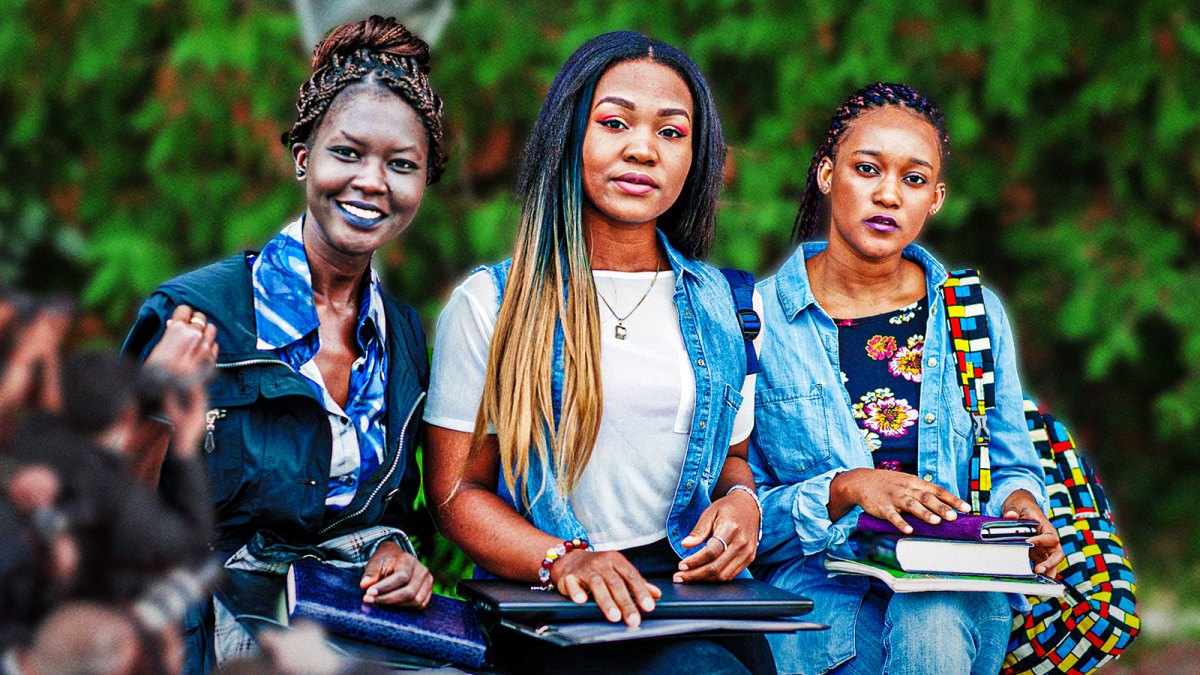
The United Negro College Fund (UNCF) released a report titled “Breaking Barriers, Building Bridges” that outlined a startling knowledge gap about HBCUs among students who don’t live in areas rich with a large number of black colleges. The 2022 survey included 146 students, teachers, and counselors who live in the West, Midwest, and Northeast and were affiliated with seven high schools in California, Indiana, Massachusetts, and Pennsylvania. The study illuminates a significant brand knowledge gap between educators and students, leading to guidance that doesn’t center on HBCUs as an educational option.
The findings of the study indicate that over 60% of students surveyed reported having little to no familiarity with HBCUs as an option for college, and over half (53%) of students reported that their school counselors never or rarely suggested attending an HBCU. I think it’s interesting that about half of the black participants were not that aware of HBCUs as a viable option for college, and there was a vast number of non-Black participants who weren't familiar with HBCUs as a college option. The statistics showed that the gap narrowed once black participants were surveyed, but there were still a staggering number who hadn’t factored HBCUs into their options.
I think this showcases how HBCUs being cultural epicenters help draw attention to our institutions in high concentration areas of black colleges. But once we leave the highly concentrated HBCU regions, we lose that advantage and have to rely on counselors to operate in good faith and on students having a baseline of knowledge that leads them towards our institutions. That isn’t sustainable.
There has to be a better media & marketing strategy for promoting HBCUs in the 21st century. We have to look at this strategy in several key ways. Earned, organic, and paid media pieces help us bridge gaps in HBCU awareness among educators and students.
As a media professional who has covered HBCU life for 9 years and has a background in sales and digital marketing, I believe a comprehensive media and marketing strategy can help close the knowledge gap we face in securing the commitment of prospective students.
Capitalize on earned & curated media
When we discuss the organic piece, we must consider the digital media and creator ecosystem that has emerged this century, driven by the strong pull of HBCU culture. We’re talking about the HBCU-based media outlets like HBCU Pulse, HBCU Buzz, Historically Black Since or HBCU Gameday.
We’re also discussing larger brands such as ESPN/Andscape and ClutchPoints/ClutchPoints HBCU that allocate resources to cover and produce content that spotlights and shares the history of HBCU life, athletics, and culture. All of these outlets are emotionally and economically invested in the growth of HBCUs. They independently use the outlets they have built to create content that promotes HBCU life and engages students, alumni, and those outside the culture.
HBCU-based TikTok, Instagram, and YouTube personalities/influencers also aid this, building authenticity-based trust among consumers of their content. These can serve as entry points into HBCU culture, converting prospective students into enrolled students at our institutions. But the strategy can’t be limited to these entities alone. We need mass media programs in this streaming era that can scale the fight to raise awareness of HBCUs' viability. While the enrollment bump that A Different World provided in the late 80’s and early 90’s might not work in the mid-2020’s and beyond, it also serves as a door that can be opened to a curiosity about HBCU life.
When A Different World was on TV during its original run from 1987 to 1993, there was a surge in college enrollment—especially among Black folks. Many of them wanted to attend HBCUs because of the experience depicted in A Different World. The legendary series is now set to receive a Netflix sequel series, which offers a perfect opportunity to scale and build the foundation for broader media and marketing outreach to prospective students.
Dial up a more location-based paid media strategy
But even then, that’s not enough. Organic and earned media impressions can only do so much to convert prospective enrollees into students. HBCUs must improve their paid media strategies to meet prospective students where they are. Studies such as those produced by the UNCF make this easier by identifying which demographic segments to microtarget. So now, our HBCU marketing and communications professionals have to move on the information.
We should see HBCUs of all sizes and locations across Instagram, TikTok, and YouTube. Why not try advertising on Twitch and other digital platforms where high school-aged students are? A well-executed paid media campaign increases the brand's “mindshare.” Mindshare is the marketing concept that the frequency of an advertisement builds attention among the target audience, leading to the brand being considered a key option. I learned this working in sales at iHeartMedia in my first job out of college, and it's served me well in devising strategy. I believe it would help HBCU leaders tremendously.
For example, when a student is considering their options after high school, they might see a North Carolina A&T or Howard University commercial that repeatedly pops up while watching popular Twitch streamers iShowSpeed or Kai Cenat. Or the Fort Valley State ad that keeps appearing on your “For You” page on TikTok could prompt you to consider what attending there would be like.
An accurate and robust digital strategy must be employed in this era, when students have so many things vying for their attention and engagement. Campus tours, recruiter visits, and college fairs aren’t enough to make up for the brand knowledge gap we’re facing. HBCUs must spark students' curiosity before they meet with their counselors so they understand the economic and cultural benefits.
Building on the foundation
These aren't the only strategies that can be effective to reach students not in our immediate reach, and the in-person recruiting strategy is still important. But, the scale that a media strategy provides helps in making up the gap and engaging students where they are to nurture their interest and hopefully move them towards enrollment in the future.